
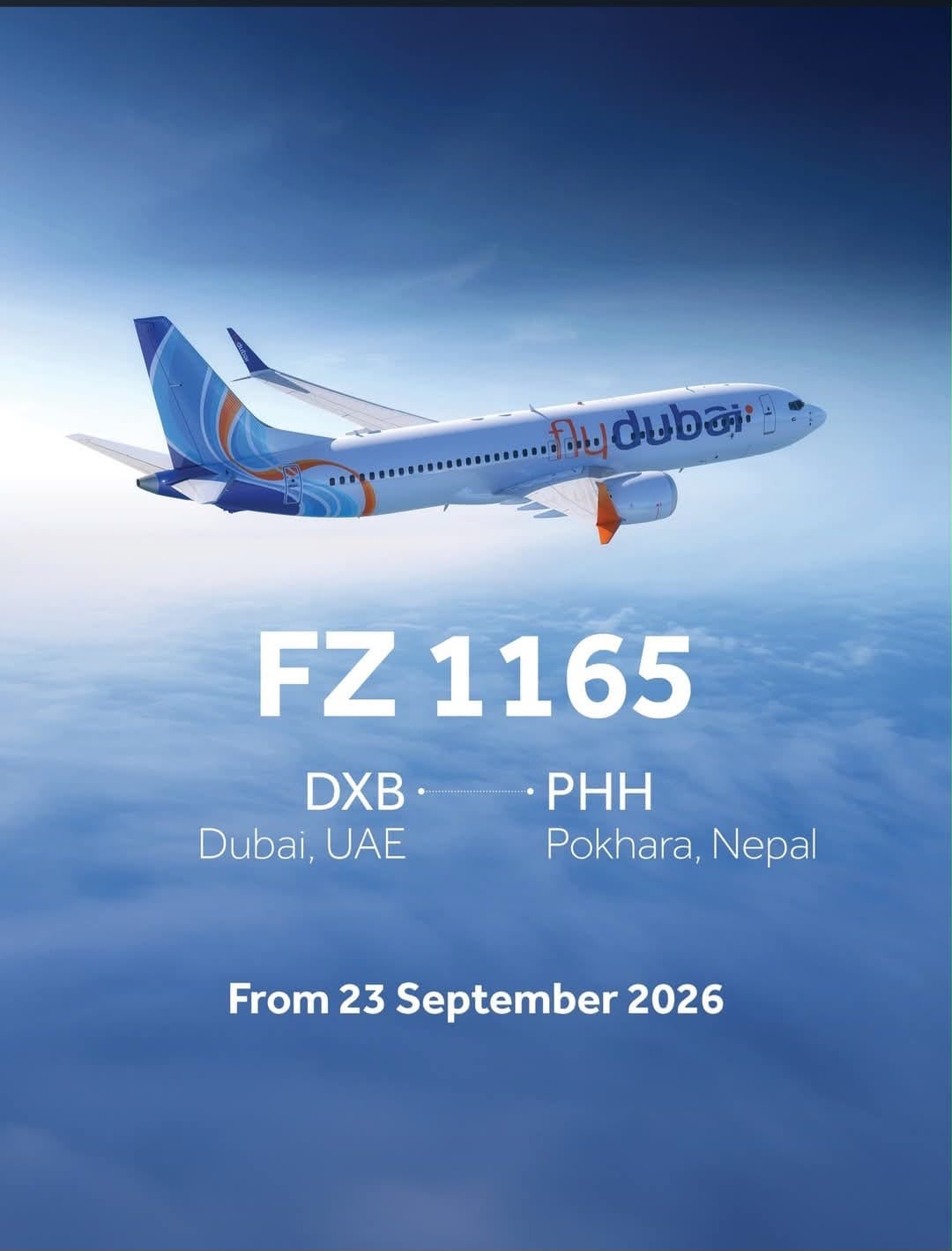
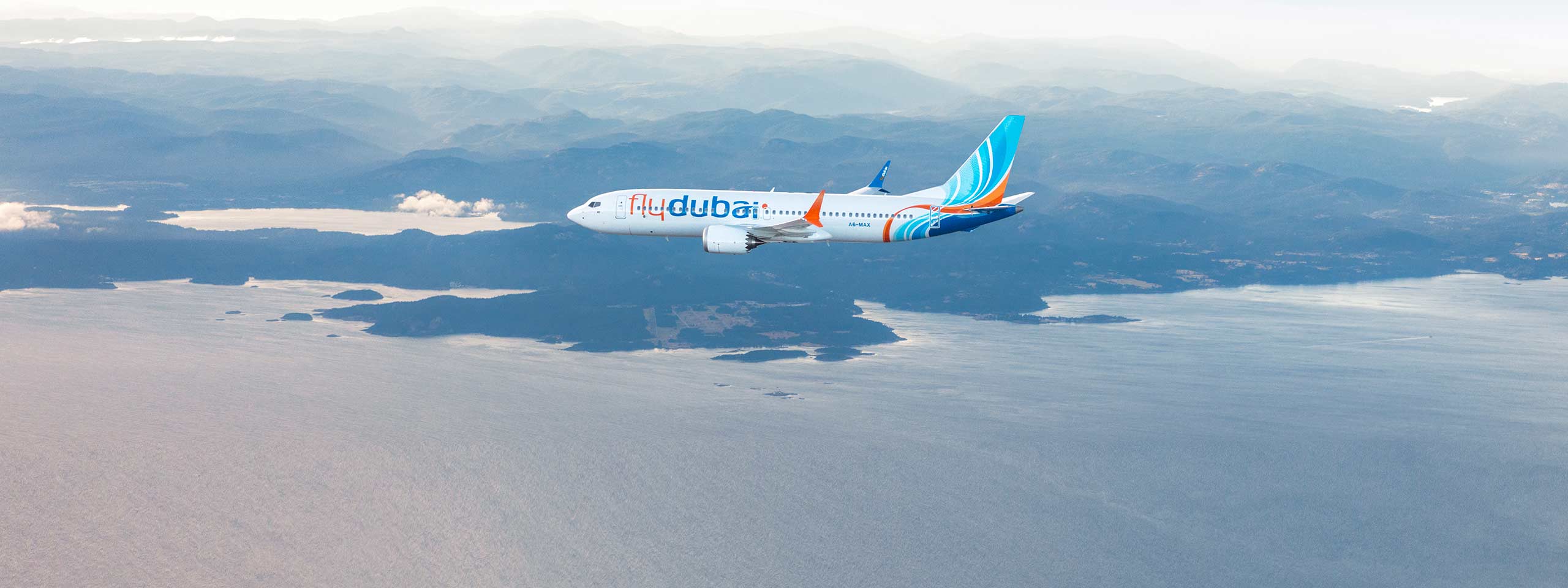
KATHMANDU — In a major breakthrough for Nepal’s aviation and tourism sectors, Dubai-based carrier flydubai has officially announced the launch of a new daily direct service connecting Dubai International (DXB) and Pokhara International Airport (PHH).
The scheduled service is set to commence on September 23, 2026, marking a historic milestone as Pokhara secures its first sustained, regular international airline operation since the airport’s inauguration in January 2023.
Expanding Nepal Footprint
The new DXB-PHH-DXB route represents flydubai’s second destination in Nepal, building on 17 years of highly successful operations to Kathmandu's Tribhuvan International Airport (KTM).
The daily flights will operate out of Terminal 3 at Dubai International (DXB). Crucially for global passengers, the service will run under a codeshare partnership with Emirates. This integration allows travelers to benefit from seamless booking, single-ticket itineraries, through-checked baggage, and streamlined transit connections across a combined global network.
A Boost for Tourism and Regional Decentralization
Pokhara Regional International Airport, constructed at a cost of roughly Rs 22 billion, has historically struggled to retain consistent international traffic, with previous brief services to regional destinations ultimately being paused. The entry of a major international carrier like flydubai is being widely celebrated by local leaders and business communities.
Pokhara Metropolitan City Mayor Dhanraj Acharya highlighted the immense economic potential of the route:
"This is not just about adding an airline service; it is a historic opportunity to enhance Pokhara’s international identity, promote tourism, expand economic activities, and decentralize air traffic concentrated in Kathmandu."
Aviation authorities noted that the direct connection opens up a vast gateway for international travelers. By transiting through Dubai's massive hub, travelers to and from western Nepal will gain streamlined access to more than 300 cities spanning the Middle East, Europe, Africa, and the Americas. The route is also anticipated to offer significant convenience to thousands of Nepali migrant workers residing in the Gulf region.





Facebook Comments