

If you have ever booked a flight, you have probably noticed the stark difference in recommended airport arrival times. For an international departure, airlines consistently advise passengers to arrive at least three hours before departure. For a domestic route, that recommendation drops to just one to two hours.
At first glance, three hours can seem excessive. After all, you have purchased your ticket, packed your bags, and perhaps even checked in online from your smartphone. Why does flying across a border demand so much extra time? The reality comes down to a multi-tiered system of regulatory compliance, physical security checkpoints, border immigration enforcement, and aircraft scale.
1. Comprehensive Document Verification and Airline Liability
The fundamental difference between domestic and international travel begins at check-in. Domestic travel relies on basic identity verification—a quick scan of a driver's license or national identity card is usually all that is required to move forward.
International routes introduce strict entry compliance enforced by foreign governments:
-
Passport Validity: Airlines must verify that your passport is valid for at least six months past your intended departure date.
-
Visa and Transit Clearances: Staff must inspect entry visas, electronic travel authorizations (such as ESTA or ETA systems), onward flight confirmations, and country-specific health declarations.
-
Financial Penalties: Foreign governments impose heavy financial fines on airlines that transport passengers lacking proper entry credentials, forcing carriers to return ineligible travelers at the airline's own expense. Because of these legal consequences, gate and counter agents examine every passenger's documents with extreme scrutiny.
2. Exit Immigration and Passport Control
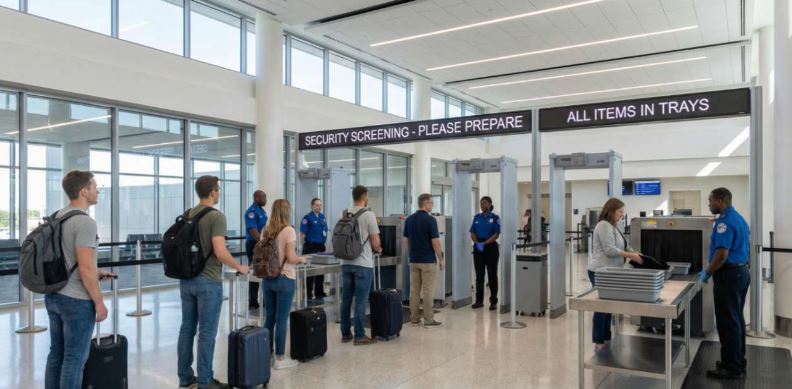
When traveling domestically, your journey through the terminal follows a short, straight path: check-in, security, and then your gate.
International travel introduces a mandatory secondary bottleneck: exit immigration.
Before leaving a sovereign nation, passengers must pass through government-operated immigration stations. Border officers inspect travel documents, verify entry logs to prevent visa overstays, run security database checks, and stamp physical or digital passports. During peak travel periods, queue times at passport control alone can absorb anywhere from 30 to 60 minutes.
3. Baggage Security and International Customs
Checked baggage procedures for long-haul travel are far more complex than domestic luggage handling. International bags undergo multi-stage security sweeps, including customs clearance, currency inspection, and agricultural safety scanning.
Additionally, automated gate-scanning cameras and strict weight allowances (often capped tightly for cabin bags on overseas flights) mean luggage handling takes significantly longer at the initial counter drop.
4. Aircraft Capacity and Early Gate Closures
The size of the aircraft operating these routes introduces physical boarding constraints:
-
Flight Capacity: Domestic routes typically rely on narrow-body jets carrying 70 to 180 passengers, which can be boarded rapidly. International routes frequently employ massive wide-body aircraft carrying 250 to over 450 passengers. Boarding hundreds of individuals, organizing overhead luggage bins, and settling everyone into their seats takes up to an hour.
-
Manifest Deadlines: International aviation laws mandate that airlines transmit a finalized Advance Passenger Information System (APIS) manifest to foreign customs and border authorities before the plane leaves the gate. Consequently, international gates close 30 to 45 minutes prior to departure, compared to just 10 to 15 minutes for domestic routes.
5. Deconstructing the 3-Hour Airport Timeline
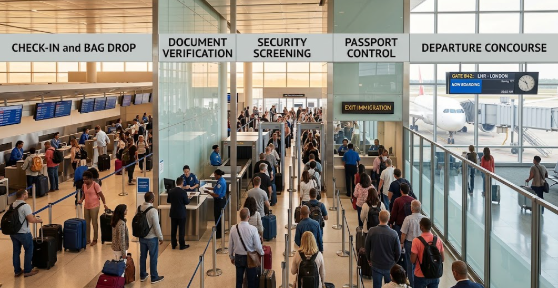
A common misconception is that arriving three hours early means sitting idle at the gate for three hours. In practice, that window covers a tightly timed sequence:
-
3.0 Hours Before Departure: Arrive at the airport terminal, join the airline counter line, present travel documents, and drop checked luggage.
-
2.0 Hours Before Departure: Enter and clear security screening, pass luggage scanners, and stand in exit passport control queues.
-
1.0 Hour Before Departure: Navigate long terminal concourses, find distant international gates, use restrooms, or purchase water.
-
45 to 30 Minutes Before Departure: International gate boarding begins, and final boarding doors are closed for takeoff preparation.
The Value of the Safety Margin
Arriving three hours before an international flight is ultimately insurance against unpredictable bottlenecks. Traffic delays on the way to the airport, long baggage drop queues, or sudden immigration backups can easily erase a 60-minute window. While arriving early might result in spending extra time sitting near your gate, arriving late can mean missing your gate closure, forfeiting your seat, and facing expensive rebooking delays.







Facebook Comments