
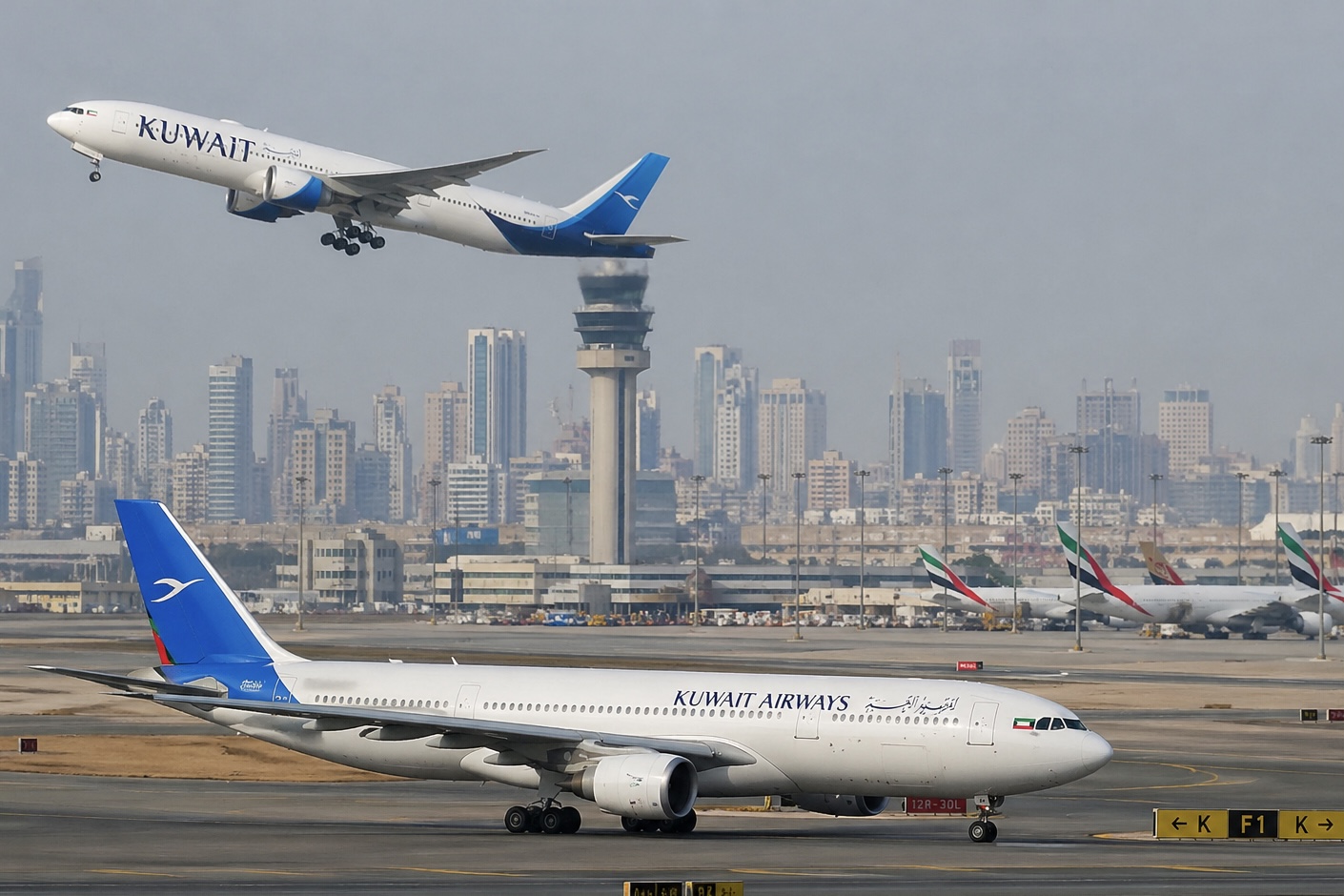
A number of Middle Eastern countries, including Kuwait, Israel, Bahrain, Iran, the United Arab Emirates (UAE), Qatar, Syria, and others, are witnessing a gradual restoration of regional air corridors as airlines cautiously restart limited flight operations following recent disruptions.
The reopening comes after a period of heightened geopolitical tension that led to widespread airspace closures, flight cancellations, and rerouting across key aviation hubs in the region. Major transit points such as Dubai, Doha, Abu Dhabi, and Kuwait City had previously faced significant operational challenges due to security risks and evolving military developments.
Airspace Slowly Reopens Across Strategic Routes
Authorities across several countries have begun easing restrictions on select air corridors, allowing airlines to gradually restore connectivity between Europe, Asia, and Africa through the Middle East. These routes are among the most important in global aviation, serving as key transit bridges for long-haul international travel.
While full normalization has not yet been achieved, limited services have resumed on several routes, particularly for essential travel, cargo operations, and repatriation flights.
Airlines Resume Services With Caution
Major regional and international carriers have started reinstating a limited number of flights, operating under strict security protocols and reduced frequencies. Airlines are prioritizing safety assessments, rerouting adjustments, and coordination with civil aviation authorities before expanding operations further.
Airports in the UAE, Qatar, Saudi Arabia, and Kuwait have also resumed partial operations, although many flights continue to face schedule changes due to ongoing regional security considerations.
Security Frameworks Remain Tight as Recovery Continues
Despite the reopening of air corridors, aviation authorities are maintaining strict monitoring systems and enhanced security frameworks. Flight paths are being continuously reviewed, and airlines are adjusting schedules in real time based on risk assessments and airspace advisories.
Officials emphasize that the recovery of regional air traffic will remain gradual and dependent on geopolitical stability, with full normalization expected only when conditions improve further.
Gradual Return of Global Connectivity
The phased reopening of Middle Eastern air corridors marks a cautious but important step toward restoring global aviation connectivity. As airlines cautiously rebuild their networks, passengers are beginning to see more route options returning, though uncertainty still shapes the regional travel landscape.
Industry experts note that while confidence is slowly returning, airlines will continue operating conservatively until long-term stability is ensured across the region.








Facebook Comments