
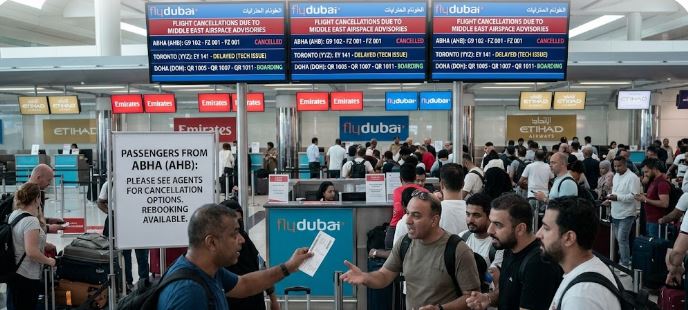
Flight disruptions between the UAE and southern Saudi Arabia have entered their fourth consecutive day, with all flydubai services from Dubai and Air Arabia flights from Sharjah to Abha International Airport remaining suspended. These cancellations were triggered by a security incident near the Saudi-Yemen border, leading major countries like Canada, the UK, and the US to advise travellers to avoid the area due to risks associated with potential missile and drone attacks. While international routes to the UAE remain halted for safety reasons, Abha's airport continues to operate domestic flights to cities like Riyadh and Jeddah. Meanwhile, Etihad Airways reported temporary delays on its Toronto-bound flights out of Abu Dhabi due to unrelated operational and technical issues.
At the same time, regional airlines are adjusting their networks in response to both security considerations and the heavy summer travel demand. Airlines like Air Astana suspended their newly resumed UAE services specifically citing the ongoing escalation of the Middle East security situation. In contrast, other regional carriers are boosting capacity where it is safe to do so. Emirates, which reports no major cancellations, is managing high passenger volumes across its global network. To meet peak seasonal demand, Qatar Airways has increased its Doha-to-Dubai schedule to five daily flights, while Oman Air and SalamAir have added thousands of extra seats on routes to Salalah to accommodate travellers heading to the Khareef autumn festival.
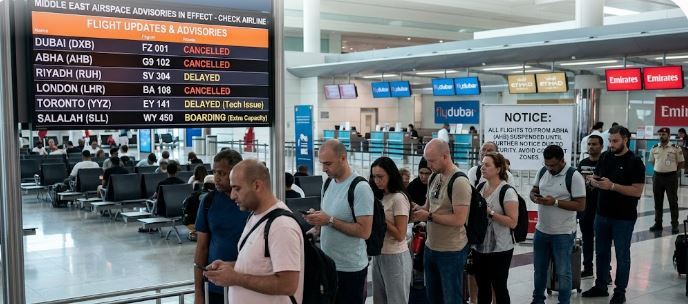
Further travel complications stem from the wider airspace restrictions imposed by European aviation authorities, who have advised airlines to completely avoid Iranian, Iraqi, and Lebanese airspace due to conflict risks. This has forced many international carriers to either cancel flights or divert onto much longer routes, adding several hours to journey times. Consequently, airlines are maintaining highly cautious schedules; flydubai has advised its passengers to arrive at least four hours before departure as carriers navigate these complex, fuel-heavy alternative paths to bypass regional conflict zones.





Facebook Comments