
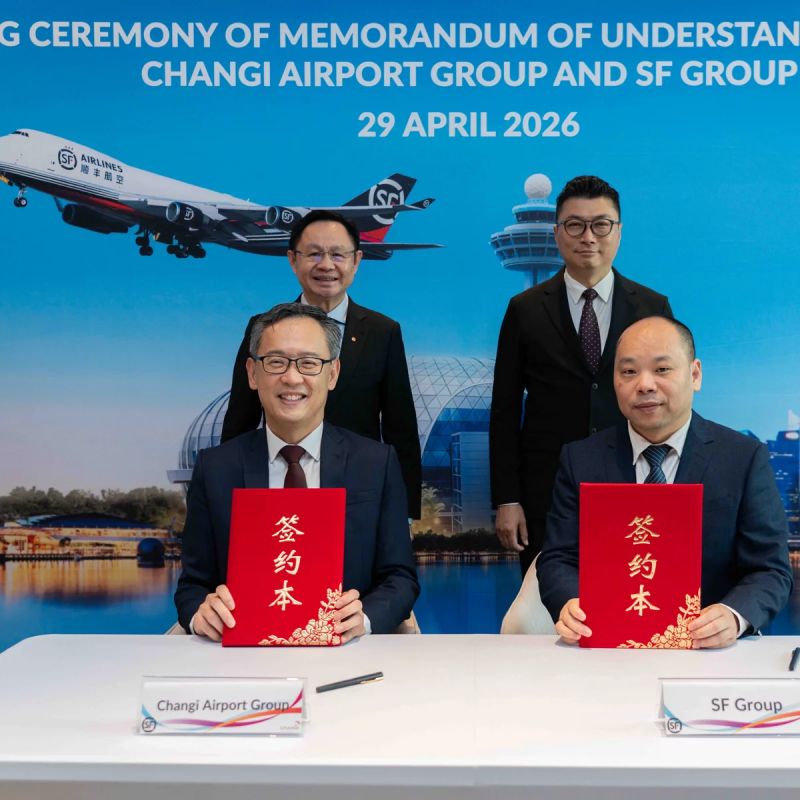
In a move set to reshape regional logistics, China’s SF Group has officially designated Singapore Changi Airport (SIN) as its first overseas global hub. This strategic partnership was solidified through a Memorandum of Understanding (MoU) between SF Group and Changi Airport Group (CAG), aimed at enhancing air cargo connectivity between China, Singapore, and the broader global market.
Key Details of the Partnership
According to AeroTime, the agreement focuses on several core pillars to optimize supply chain efficiency:
-
Expanded Flight Networks: SF Airlines, the group's freighter arm, intends to increase its flight frequencies and capacity through Changi, leveraging Singapore's position as a premier gateway to Southeast Asia and Oceania.
-
Infrastructure Synergy: The deal explores the integration of SF Group’s massive logistics network with Changi’s world-class cargo facilities, including the Changi Airfreight Centre.
-
Innovation in Logistics: Both parties will collaborate on digitalizing cargo operations and implementing sustainable logistics solutions to streamline the flow of goods.
Why Changi?
As reported by AeroTime, the selection of Changi Airport is a calculated move by SF Group. While the company operates a primary domestic hub at Ezhou Huahu Airport in China, Changi provides the necessary international infrastructure and "fifth freedom" traffic rights that allow SF to better serve its growing international clientele.
"This collaboration with SF Group is a testament to Changi Airport’s appeal as a leading air cargo hub," noted representatives from Changi Airport Group.
Strategic Impact
This deal marks a significant milestone for SF Group—often referred to as the "FedEx of China"—as it seeks to pivot from a domestic powerhouse to a dominant global player. According to industry analysts cited by AeroTime, the presence of SF Group at Changi is expected to:
-
Boost Cargo Volumes: Increase the throughput of e-commerce and high-value perishables moving through Singapore.
-
Strengthen Trade Links: Solidify the logistics corridor between China and the ASEAN region.
-
Enhance Competition: Provide more robust shipping options for businesses looking for rapid transit times between East Asia and global markets.
This partnership underscores Singapore’s enduring relevance in the global supply chain, even as competition among regional airports intensifies.


Facebook Comments