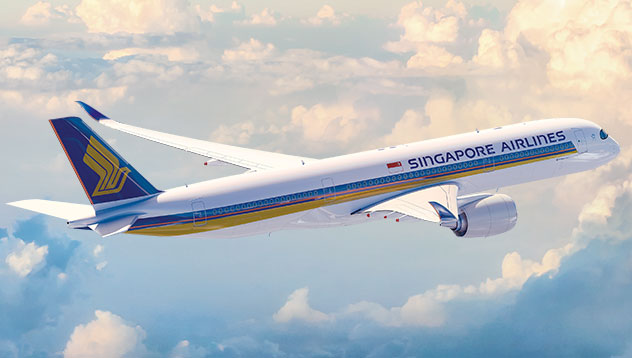
Nearly two years after the harrowing events aboard flight SQ321, Singapore Airlines (SIA) is entering a new phase of legal scrutiny. As the two-year statute of limitations for claims under international aviation law approaches in May 2026, the first major wave of litigation has officially landed in the UK High Court. Three British passengers—Bradley Richards, Benjamin Read, and Alison Read—have filed a formal lawsuit against the carrier, seeking damages that far exceed the initial compensation packages offered by the airline.
The Incident: A Moment of Terror
On May 21, 2024, the Boeing 777-300ER was en route from London Heathrow to Singapore when it encountered severe "clear-air turbulence" over the Irrawaddy Basin in Myanmar. Data from the flight recorder revealed a violent sequence of events: the aircraft dropped approximately 178 feet (54 meters) in just 4.6 seconds.
The force was so extreme that unbelted passengers and crew were launched into the cabin ceiling before being slammed back onto the floor. The incident resulted in the tragic death of a 73-year-old British man, Geoff Kitchen, and left dozens of others with life-altering injuries, including spinal fractures and brain trauma.
The Legal Challenge: Why a Lawsuit?
While Singapore Airlines was quick to offer initial compensation—including $10,000 for minor injuries and $25,000 in advance payments for those with serious medical needs—the plaintiffs argue these sums are insufficient.
Represented by Keystone Law, the claimants are pushing for a more comprehensive settlement. Bradley Richards, one of the plaintiffs, has been vocal about the long-term impact of his injuries. Having suffered significant spinal damage, he has expressed grave concerns that his physical limitations may end his professional career, necessitating a payout that accounts for a lifetime of lost earnings and specialized medical care.
The Montreal Convention and Negligence
The case will be argued under the Montreal Convention, a global treaty that dictates how airlines compensate passengers for injuries or death.
-
Liability Threshold: Under the convention, airlines are strictly liable for damages up to roughly $170,000, regardless of fault.
-
The Burden of Proof: To secure damages above this limit, the plaintiffs must prove that the airline was negligent. The legal battle will likely focus on whether the flight crew responded quickly enough to weather radar or if the seatbelt sign was illuminated in a timeframe that could have prevented the injuries.
The Path Ahead
Singapore Airlines has already refunded all airfares for the 211 passengers on board and offered to cover immediate medical expenses. However, this High Court filing signals that many survivors are not satisfied with "goodwill payments."
As the aviation industry watches closely, this case could set a significant precedent for how airlines manage the increasing frequency of severe turbulence in an era of changing global climate patterns. For the victims, however, the lawsuit is less about industry trends and more about securing the resources needed to rebuild lives that were forever changed in 4.6 seconds of chaos.


Facebook Comments