
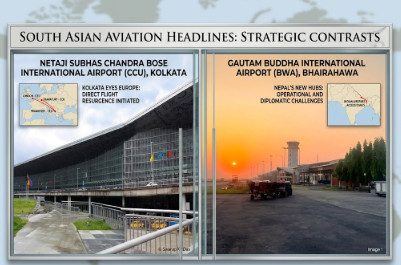
Kolkata/Kathmandu — As eastern India moves to reclaim its position on the global aviation map, Kolkata’s Netaji Subhas Chandra Bose International Airport has initiated high-level discussions with major European carriers, including British Airways and Lufthansa, to revive direct long-haul flights to the United Kingdom and continental Europe.
The initiative gained momentum during the recent Routes Asia 2026 forum in China, where airport officials presented detailed passenger demand data and market projections to international airlines. Kolkata aims to tap into the large pool of travellers from eastern India who currently rely on Middle Eastern transit hubs for connections to Europe and other international destinations.
Two Airports, Two Different Strategies
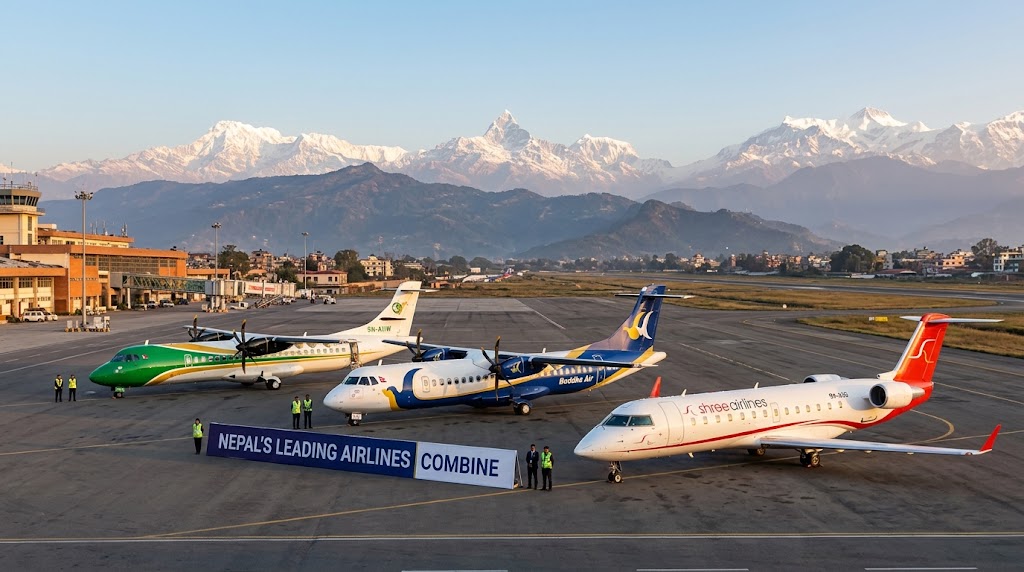
Kolkata’s proactive and market-driven strategy stands in sharp contrast to the challenges facing Nepal’s aviation sector, particularly at Gautam Buddha International Airport and Pokhara International Airport.
Despite massive infrastructure investments and years of planning, both Nepali airports continue to struggle to attract sustainable international traffic. The situation highlights a key reality in modern aviation: building airports is easier than building commercially viable international air networks.
While Kolkata is actively engaging airlines through route development strategies, market analysis, and long-term passenger forecasts, Nepal’s new international airports remain constrained by operational, diplomatic, and commercial challenges.
Why Nepal’s Airports Are Facing Difficulties
Aviation experts identify several factors slowing the growth of Nepal’s international aviation hubs.
One of the biggest challenges is limited access to low-altitude entry routes through Indian airspace. Both Pokhara and Bhairahawa require more efficient air corridors for fuel-efficient and commercially viable international operations. Without broader aviation cooperation between Nepal and India, airlines face longer flight times, higher operational costs, and scheduling difficulties, reducing the attractiveness of operating flights to these destinations.
Another issue is the lack of strong and long-term airline incentives. Launching a new international route involves significant financial risk, and airlines generally expect stable support measures such as long-term waivers on landing and parking fees, marketing partnerships, and operational assistance. Although Nepal introduced temporary incentives at Gautam Buddha International Airport, analysts argue that the measures lacked the consistency and long-term commitment needed to build airline confidence.
In addition, airlines remain cautious about passenger demand. Despite Pokhara’s international tourism appeal, carriers are hesitant to deploy aircraft without clear evidence of year-round profitability. Experts say Nepal still lacks a fully coordinated tourism and aviation strategy capable of assuring airlines that routes can remain commercially sustainable beyond peak tourist seasons.
Infrastructure Alone Is Not Enough
The contrasting paths of Kolkata and Nepal’s new airports underline a broader lesson for South Asian aviation: infrastructure alone does not guarantee international connectivity.
Nepal has already invested heavily in aviation infrastructure to reduce pressure on Kathmandu and promote tourism in regions such as Lumbini and Pokhara. The government has also held discussions with India over airspace access and offered limited incentives to international airlines. However, both airports continue to face challenges due to limited connectivity, weak airline confidence, and insufficient passenger demand.
Experts believe Nepal must now shift its focus from construction to long-term aviation strategy. This includes securing better air routes through Indian airspace, introducing stronger and more consistent airline incentives, improving tourism promotion, and expanding regional connectivity with neighbouring countries.
Ultimately, Nepal’s aviation future will depend not only on modern airports, but also on diplomacy, stable aviation policies, effective tourism planning, and the ability to create profitable operating conditions for airlines.
Sandip Jnawali






Facebook Comments