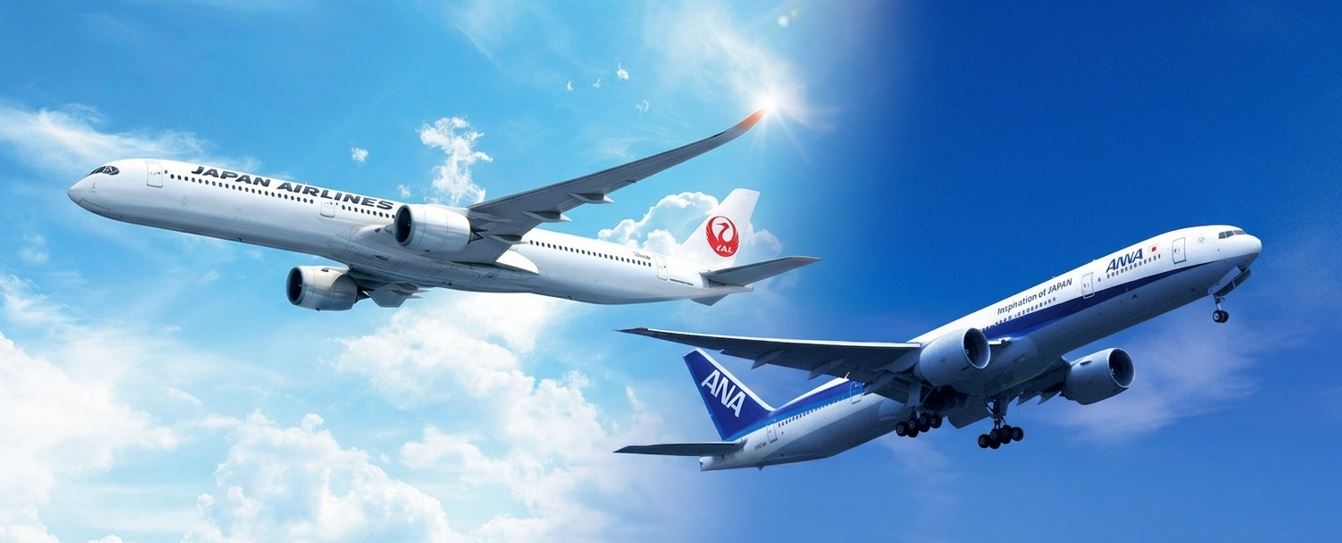
In an unprecedented move that challenges traditional corporate boundaries, Japan’s two largest rival airlines, All Nippon Airways (ANA) and Japan Airlines (JAL), have come together to issue a powerful joint call to action. Operating under the metaphor of the "two wings" of Japan's aviation industry, the long-time competitors have collectively published a second joint report titled “Toward Net Zero CO2 Emissions from Air Transport in 2050.” The primary objective of this historic collaboration is to urgently address the critical global scarcity of Sustainable Aviation Fuel (SAF) and map out a viable path toward complete decarbonization over the next few decades.
The report highlights a sobering reality: as of 2025, SAF accounted for a meager 0.6% of the global aviation fuel supply. The carriers warn that the next five years represent a pivotal window. If SAF production is not drastically scaled up and production costs are not reduced during this timeframe, the industry will experience a severe supply-demand gap. This bottleneck threatens more than just airline operations; it presents a direct risk to Japan's broader economic security. The country heavily relies on air transport to achieve its national target of attracting 60 million inbound international visitors annually, while also relying on regional flights to maintain essential domestic connectivity across its islands.
To navigate these headwinds, ANA and JAL are advocating for a tailored, collaborative strategy known as the "Japanese Model." This approach emphasizes balancing the pace of implementation and regulatory standards with the actual growth of domestic SAF manufacturing capacity. By aligning policy with production capabilities, the model aims to prevent sudden, prohibitive price hikes that could destabilize the market.
Furthermore, the airlines are pioneering a "Co-creation Model" to ensure that the financial premium of switching to sustainable fuel does not fall solely on the aviation industry. Recognizing that SAF is currently much more expensive than conventional jet fuel, the report proposes a framework to distribute these costs across society as a whole. This includes expanding corporate initiatives that help businesses reduce their Scope 3 indirect supply chain emissions. Mechanisms like ANA’s SAF Flight Initiative and JAL’s Corporate SAF Program will be utilized to engage cargo clients, corporate travelers, and government bodies. Ultimately, the two industry giants argue that securing a green future for aviation requires a united, society-wide effort—linking fuel producers, airlines, corporations, and everyday passengers to protect Japan's global connectivity for generations to come.


Facebook Comments