
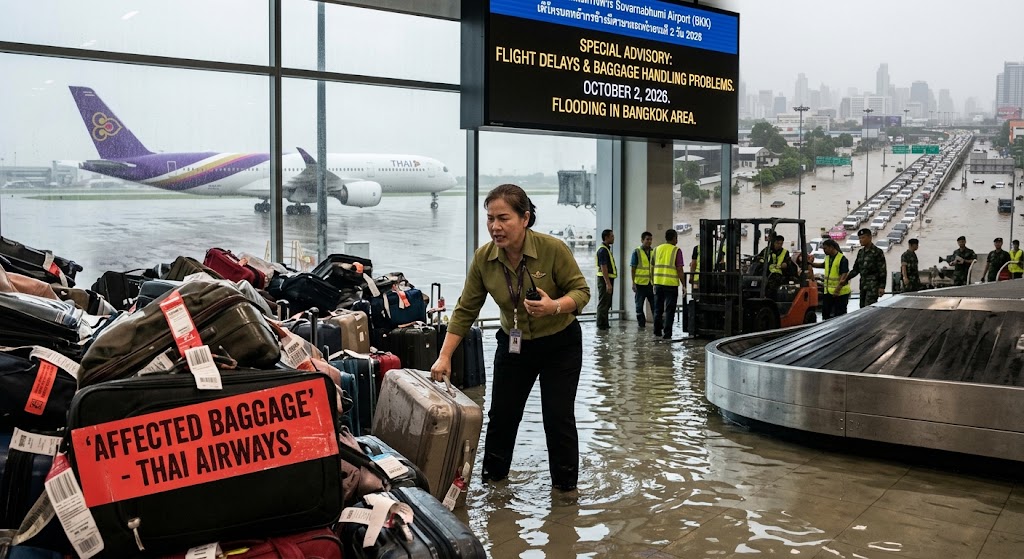
BANGKOK, Oct. 2, 2026 — Severe flooding and heavy rainfall across Bangkok have disrupted aviation operations and ground transportation, creating delays and baggage-handling problems at the city’s two major airports, Suvarnabhumi Airport (BKK) and Don Mueang International Airport (DMK).
Both airports have remained operational, with flights continuing to arrive and depart. However, flooding across parts of Bangkok and surrounding areas has made it difficult for airport employees and passengers to reach terminals, while adverse weather has contributed to delays and changes to some flight schedules. Thailand’s Civil Aviation Authority has advised passengers to allow additional travel time and check flight information before leaving for the airport.
Suvarnabhumi Faces Baggage and Flight Disruptions
Suvarnabhumi has experienced the most significant operational impact. Flooding prevented hundreds of ground employees from reaching the airport, contributing to a major baggage-handling backlog.
Thai Airways International temporarily reduced its Bangkok departures and cancelled dozens of domestic and international flights as it worked to restore normal operations. Reports indicated that around 5,600 pieces of baggage were affected during the disruption.
The cancellations affected a wide range of international destinations, including cities in Europe, Asia and Australia. Thai Airways also brought in additional personnel and military support to help deal with the baggage backlog and restore normal operations.
By October 1, the Thai government was reporting further schedule adjustments, while a government update on October 2 said Thai Airways planned to operate all flights on October 3, indicating that the airline was moving toward a broader recovery.
Don Mueang Remains Operational
Don Mueang has also been affected by the surrounding flooding, but airport operations have generally remained normal.
The Thai government previously confirmed that flights at Don Mueang were operating as usual despite flooding in nearby areas. Ground transportation was more challenging, with temporary restrictions affecting taxi access and minor delays on some bus services.
Thailand’s authorities have also provided transport measures connecting the two Bangkok airports as conditions improve. Taxi services at Don Mueang were reported to have resumed on October 1.
Airport Access Remains a Key Challenge
Although the airport runways and terminals have remained operational, getting to the airports has been one of the major challenges for passengers.
Authorities have advised travellers to avoid heavily flooded roads and allow substantially more time for airport transfers. At Suvarnabhumi, passengers have been advised to use major expressways where possible, while rail services such as the Airport Rail Link and SRT Red Line provide alternatives to road transportation.
The Civil Aviation Authority of Thailand has also urged passengers to check their flight status directly with airlines before travelling. Weather-related delays or cancellations may require airlines to adjust schedules depending on operational and safety conditions.
Operations Gradually Recovering
Floodwaters in Bangkok have begun to recede as rainfall eases, although some areas continue to face standing water and transportation problems. Recent reports indicate that the most serious aviation disruption has been concentrated around baggage handling and airline staffing rather than a complete closure of either airport.
The situation highlights how flooding can affect aviation even when airport infrastructure itself remains operational. Disruptions to roads, public transport and the availability of ground staff can quickly lead to baggage delays, flight cancellations and knock-on effects across an airline's network.
Passengers travelling through Bangkok in the coming days should continue to check their flight status, allow extra time for airport transfers and follow instructions from their airline and airport authorities.


Facebook Comments