
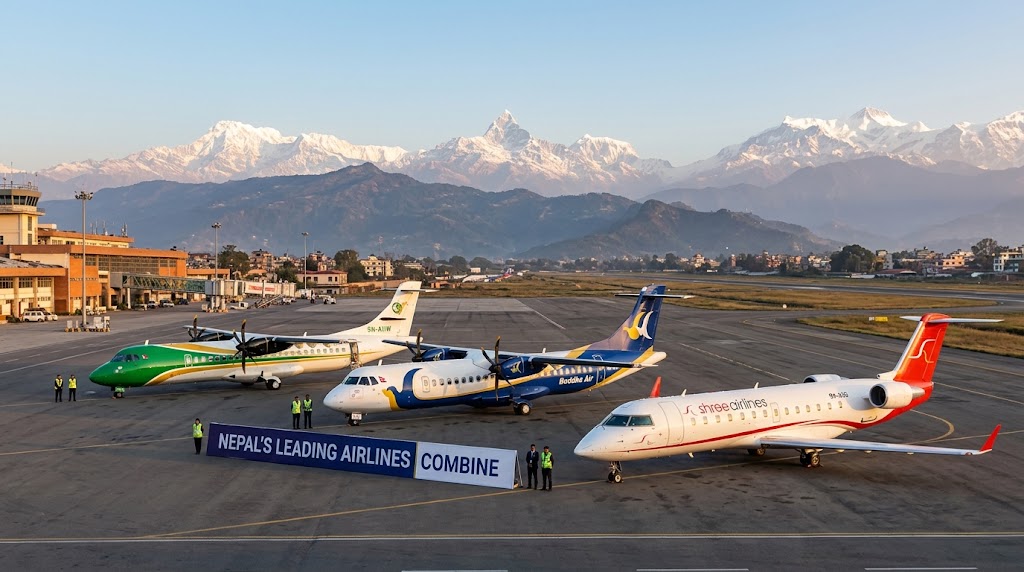
KATHMANDU, Nepal — With Nepal’s biggest festival, Dashain, approaching, demand for domestic air travel is rising sharply as thousands of passengers prepare to leave Kathmandu and return to their hometowns.
However, growing passenger demand has also brought renewed concerns over seat availability, rising airfares and the transparency of airline booking systems.
Passengers searching for domestic flights for the Dashain travel period say that seats are increasingly difficult to find, while fares on several popular routes have risen significantly. Some travelers have also questioned why certain flights appear to have no seats available through online booking platforms, while seats may later become available through other channels.
This has led to concerns among passengers that airlines may be holding back or restricting the release of some seats during the peak travel period.
Passengers Question Seat Availability
The issue has become particularly noticeable on high-demand routes connecting Kathmandu with destinations such as Biratnagar, Bhadrapur, Pokhara, Nepalgunj, Bhairahawa, Dhangadhi and Bharatpur.
During Dashain, thousands of people travel from Kathmandu to their hometowns, creating a major seasonal surge in demand. As lower-fare booking classes sell out quickly, passengers are often left with more expensive fare categories.
Some passengers have reported that a flight initially appeared to be fully booked, but seats became available again after some time. Such experiences have fueled speculation that airlines may be temporarily withholding seats from the public booking system.
However, the absence of seats from an online booking platform does not necessarily mean that an airline is deliberately hiding seats.
Airlines may restrict or temporarily hold seats for operational reasons, aircraft changes, group bookings, connecting passengers, special allocations or other commercial and operational requirements.
Transparency Becomes a Key Issue
While airlines have legitimate reasons to manage their inventory, passengers are calling for greater transparency during the Dashain peak period.
If seats are being held for operational or commercial reasons, passengers argue that airlines should provide clearer information about availability and fare conditions rather than leaving travelers uncertain about whether a flight is genuinely sold out.
The situation becomes more sensitive during major festivals, when passengers often have limited flexibility and may have no choice but to purchase higher-priced tickets to reach their hometowns.
Rising Demand, Limited Capacity
Nepal's domestic aviation market already operates with limited capacity on several key routes. During Dashain, the sudden increase in demand can quickly exceed the number of available seats.
When cheaper fare classes disappear, the remaining seats can appear significantly more expensive. This can create the perception that airlines are deliberately increasing fares, even when the pricing may be the result of normal revenue-management systems based on demand and remaining inventory.
Nevertheless, the combination of limited capacity, high demand and changing seat availability is creating frustration among passengers.
Calls for Stronger Monitoring
With Dashain approaching, passengers and travel-sector stakeholders are likely to closely monitor airline ticket sales and fare movements.
Regulatory authorities may also need to ensure that airlines maintain transparent booking practices and that passengers receive accurate information about available seats and applicable fares.
For travelers planning to fly during Dashain, booking as early as possible, checking multiple official booking channels and confirming fares directly with airlines or authorized travel agents can help reduce the risk of last-minute difficulties.


Facebook Comments