
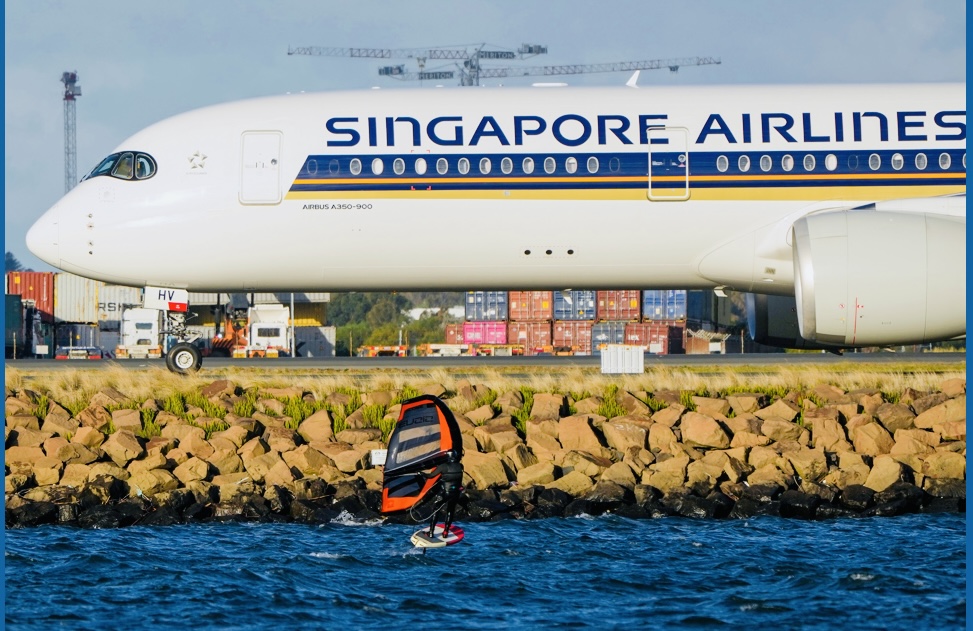
SINGAPORE — Singapore has taken a global lead in aviation sustainability by introducing its first-ever Sustainable Aviation Fuel (SAF) levy, a new ticket surcharge aimed at supporting the adoption of cleaner-burning jet fuels and reducing carbon emissions from air travel.
Under the new policy announced by the Civil Aviation Authority of Singapore (CAAS), tickets sold from April 1, 2026, for flights departing Singapore from October 1, 2026, will include a levy that varies by distance and cabin class. Economy passengers on short-haul regional routes will pay as little as about SG$1 (approximately US$0.75), while long-haul premium travellers could see surcharges up to SG$41.60 (about US$32). Cargo shipments will also incur a separate distance- and weight-based charge.
Funding Cleaner Aviation
The SAF levy is designed to help Singapore scale up the use of sustainable aviation fuel, which can be produced from used cooking oil, agricultural waste, and other low-carbon feedstocks. This fuel burns cleaner than conventional jet fuel and is considered a key tool for reducing aviation’s climate impact without requiring changes to existing aircraft.
Daniel Ng, Chief Sustainability Officer at CAAS, said the levy ensures “all aviation users contribute to sustainability at a cost that is manageable for the air hub.” The collected funds are intended to support SAF procurement and may be directed toward fuel or SAF credits to strengthen supply certainty.
Singapore at the Center of SAF Growth in Southeast Asia
Singapore is already establishing itself as a regional leader in SAF production. The city-state hosts Southeast Asia’s largest SAF facility and is building a next-generation plant with agreements to supply fuel to major international carriers. In neighboring countries, Thailand recently opened its own SAF facility in Bangkok, while Malaysia, Vietnam and Indonesia are progressing on related production and policy fronts.
Industry experts highlight Southeast Asia’s potential role in global SAF supply, given its abundant access to agricultural and forest waste feedstocks — a key advantage as demand for low-carbon aviation fuels grows worldwide.
Aviation Sustainability in Focus
The introduction of this levy coincides with broader efforts to reduce aviation’s carbon footprint. While SAF currently makes up a small fraction of global jet fuel use, governments and airlines worldwide have set long-term targets for expanded adoption as part of strategies to achieve net-zero emissions by 2050.
Singapore’s SAF levy marks a first-of-its-kind policy for the aviation sector and may provide a model for other nations exploring ways to finance the transition to greener air travel.






Facebook Comments