
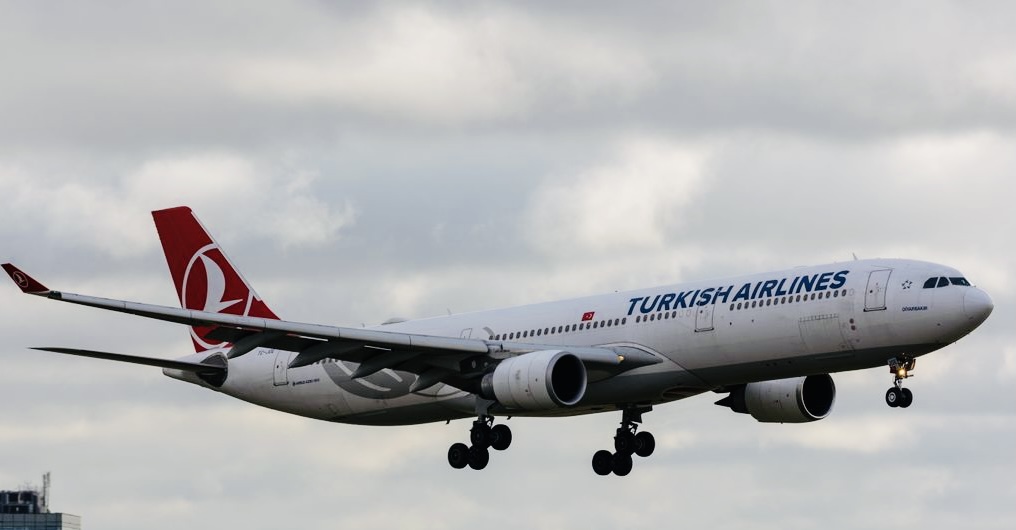
Turkish Airlines is evaluating plans to expand its presence in the United Kingdom by adding London City Airport (LCY) to its network, potentially making it the carrier’s fourth gateway in the British capital alongside Heathrow, Gatwick, and Stansted. Speaking to The Times, Turkish Airlines Chairman Murat Şeker identified the central London airport as a key target within the airline's broader strategy to expand its international reach and channel high-yield traffic through its central hub at Istanbul Airport. Adding London City would allow the carrier to directly serve financial and business travelers located near central London’s corporate hubs, offering seamless connecting flights across Europe, Asia, and beyond.
Despite the strong commercial interest, launching operations at London City presents significant operational and fleet hurdles. The airport is renowned for its restrictive operating parameters, which include a short runway and a steep 5.5-degree final approach profile that severely limit the types of aircraft certified to land there. To expand its operational capabilities, London City is seeking regulatory approval for a revised, shallower 4.49-degree approach procedure (RNP-AR). If regulatory approvals proceed as planned, flights under the new standard are expected to begin no earlier than January 2027, aimed specifically at permitting larger, modern aircraft such as the Airbus A320neo to operate at the airfield.
This creates a unique technical conflict for Turkish Airlines. While the proposed approach modification relies heavily on the A320neo, Turkish Airlines does not operate the variant in its mainline fleet, relying instead on Airbus A319s, A320ceos, and larger A321neos. Although the group's low-cost subsidiary, AJet, operates the A320neo, the two carriers maintain distinct Air Operator Certificates (AOCs), preventing a straightforward transfer of aircraft to mainline Turkish Airlines routes.
To overcome these technical limits, Turkish Airlines could potentially procure a dedicated sub-fleet of leased A320neos specifically for London City services, or await potential technical certification for other aircraft types like the Airbus A321neo or Boeing 737 MAX 8. Alternative smaller aircraft, such as the Embraer E195-E2—which already operates at London City—could theoretically serve the route as performance capabilities improve. Ultimately, Turkish Airlines must evaluate whether the commercial returns of targeting central London's business traffic justify the financial and logistical demands of securing specialized aircraft for the unique airport.



Facebook Comments