
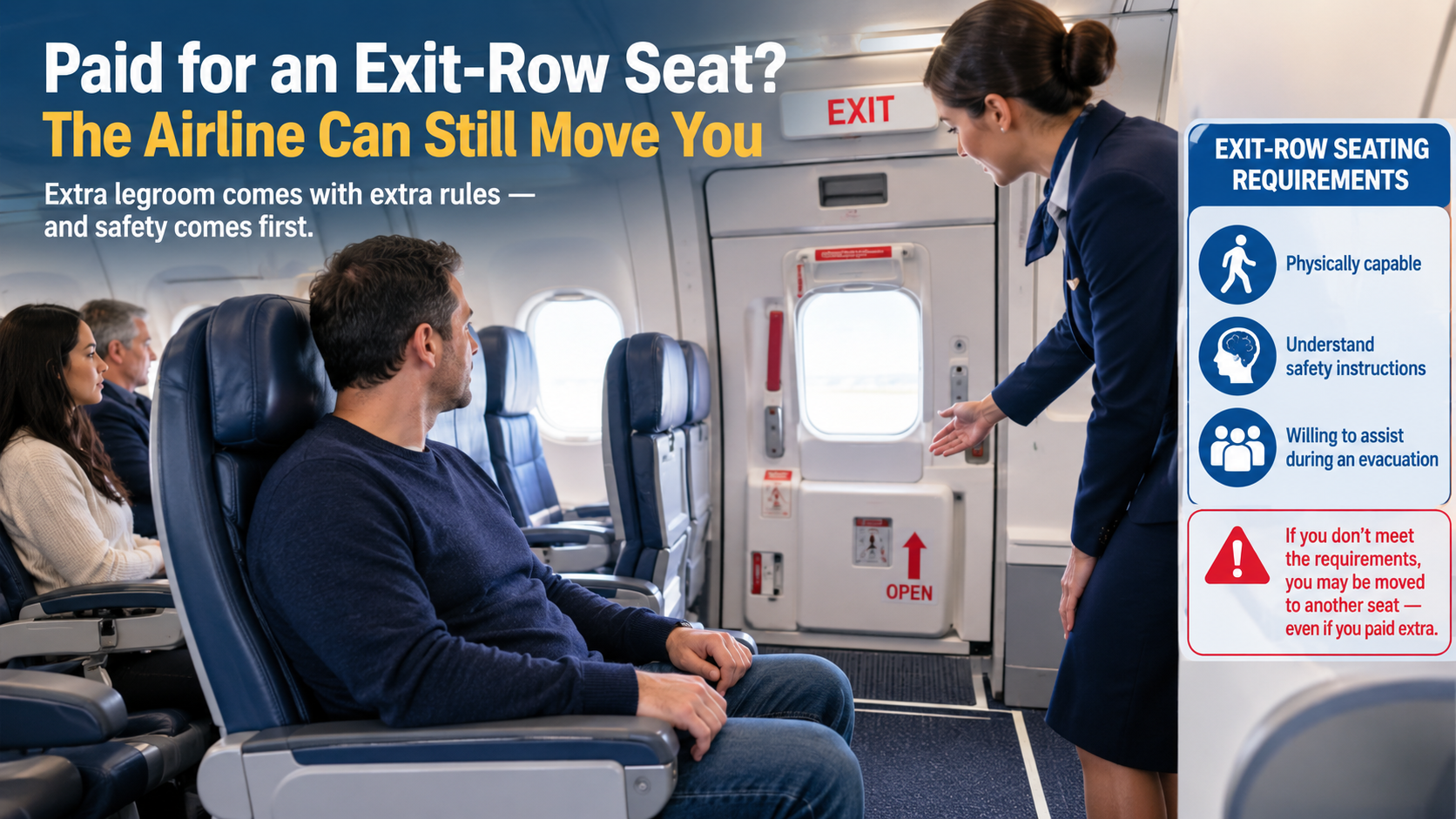
Passengers who pay extra to reserve an emergency exit-row seat may assume that the seat is guaranteed. However, aviation safety rules can override a paid seat selection if a passenger does not meet the requirements for sitting next to an emergency exit.
Exit-row passengers have an important safety responsibility. In the event of an emergency evacuation, they may be required to operate an emergency exit and assist other passengers. For this reason, airlines and aviation authorities impose specific eligibility requirements for passengers occupying these seats.
Rules established by aviation authorities, including the U.S. Federal Aviation Administration (FAA), the European Union Aviation Safety Agency (EASA) and national civil aviation regulators, generally require exit-row passengers to be physically capable of performing the necessary duties, understand the relevant safety instructions and be willing to assist during an evacuation.
Why Can an Airline Move a Passenger?
Selecting an exit-row seat through an airline's website or paying an additional seat-selection fee does not override safety requirements.
Cabin crew can assess passengers before departure and may move a passenger if they determine that the person cannot safely perform the required duties.
Depending on the applicable regulations and airline policy, passengers may be unsuitable for an exit-row seat if they:
- Have mobility or physical limitations that could prevent them from operating the emergency exit.
- Cannot use their arms, hands or legs effectively enough to perform the required actions.
- Have a medical condition or use equipment that could interfere with an emergency evacuation.
- Are unable or unwilling to follow crew instructions or assist other passengers.
- Are travelling with a child or another passenger who requires their direct assistance.
- Cannot understand the safety instructions necessary to perform the exit-row responsibilities.
- Do not meet applicable age or other eligibility requirements.
The exact requirements can vary depending on the country, aircraft type and airline.
Paying for the Seat Does Not Change the Safety Rules
Modern airline reservation systems allow passengers to select preferred seats, including exit-row seats, months or even days before departure.
However, the seat-selection process does not replace the final safety assessment carried out by cabin crew.
A passenger may therefore select and pay for an exit-row seat but still be reassigned before takeoff if the crew determines that the passenger does not meet the applicable requirements.
This can also happen if a passenger initially qualifies but later tells the crew that they are unwilling or unable to assist during an emergency.
What Happens to the Extra Seat Fee?
If an airline moves a passenger from a paid exit-row seat for safety reasons, the treatment of the additional seat-selection fee depends on the carrier's terms and conditions.
Some airlines may refund the fee, while others have different policies depending on the circumstances and the type of fare or seat purchased.
Passengers should therefore check the airline's seat-selection and refund conditions before paying a premium for an exit-row seat.
Extra Legroom Does Not Always Mean an Exit Row
Passengers who want additional legroom but cannot meet exit-row requirements have other options.
Bulkhead seats and other designated extra-legroom seats can provide additional space without requiring passengers to perform emergency-exit duties. However, these seats can also have their own restrictions, particularly concerning passengers travelling with infants, mobility equipment or other special requirements.
For passengers with disabilities or specific accessibility needs, contacting the airline before travel is advisable. The airline can explain available seating options and any applicable restrictions rather than relying solely on the online seat-selection system.
Safety Comes Before Seat Selection
Exit-row seats are different from ordinary preferred seats because they come with additional responsibilities.
The key point for passengers is simple: paying for an exit-row seat does not guarantee that they will remain in it if they do not meet the applicable safety requirements.
Ultimately, the cabin crew's responsibility is to ensure that passengers seated at emergency exits are capable of carrying out the required duties if an evacuation becomes necessary.
For airlines, the priority is safety. For passengers, understanding the rules before paying for an exit-row seat can help avoid surprises at the gate or onboard.






Facebook Comments