
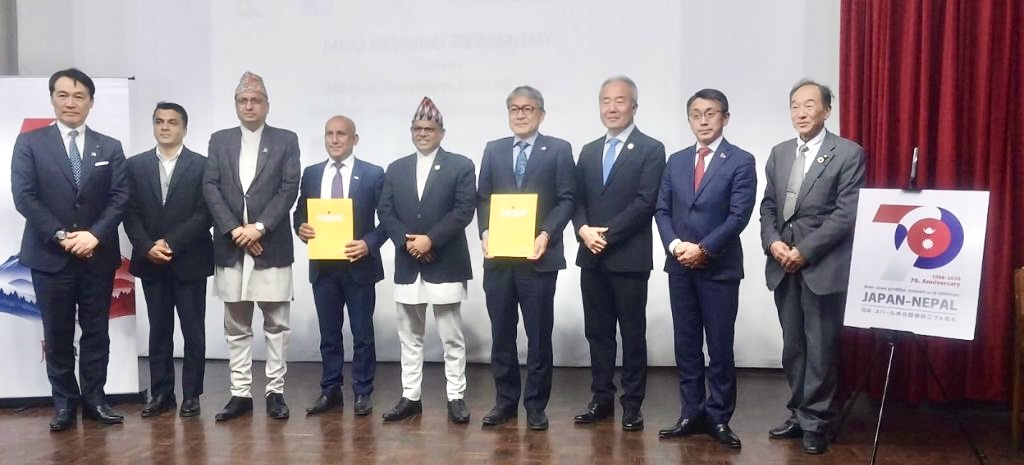
KATHMANDU — Nepal is strengthening its tourism diplomacy with Japan after the Nepal Tourism Board (NTB) signed a Memorandum of Understanding (MoU) with Wakayama Prefecture, setting the stage for closer cooperation in sustainable destination development, knowledge exchange and joint promotion.
The agreement, signed in Kathmandu, outlines collaboration in eco-friendly tourism practices, cultural heritage preservation, community-based tourism models and bilateral marketing initiatives. Officials say the partnership reflects growing momentum in Nepal–Japan tourism ties and aligns with broader sustainability goals shaping the global travel industry.
NTB Chief Executive Officer Deepak Raj Joshi and Wakayama Governor Izumi Miyazaki formalized the pact, pledging institutional cooperation through technical exchanges, familiarization visits and joint events aimed at boosting two-way visitor flows.
Nepal’s Minister for Culture, Tourism and Civil Aviation Anil Kumar Sinha welcomed the Japanese delegation, highlighting the long-standing diplomatic relations between the two countries and emphasizing sustainable growth as a priority for Nepal’s tourism strategy.
According to NTB officials, Japanese arrivals to Nepal have shown steady improvement, with renewed air connectivity and targeted promotional campaigns contributing to the upward trend. The new MoU is expected to further stimulate visitor exchange, especially in niche segments such as pilgrimage tourism, nature-based travel and heritage circuits.
While non-binding in nature, the agreement establishes a framework for long-term cooperation, including information sharing on destination management, tourism technology, and responsible travel standards.
Industry observers note that the collaboration comes at a time when Asian destinations are accelerating efforts to balance tourism growth with environmental stewardship — a key theme shaping aviation-linked tourism development across the region.
The partnership is effective immediately, with both sides designating focal agencies to oversee implementation and coordinate upcoming programs.





Facebook Comments